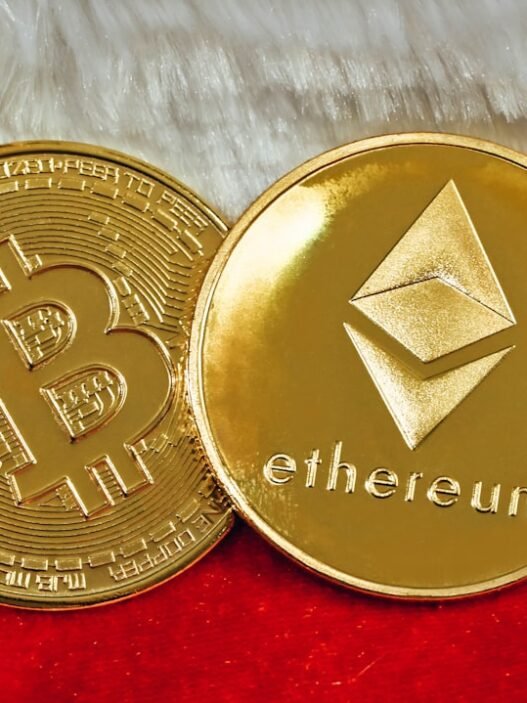













Remember that moment in 2017 when your tech-obsessed cousin tried explaining Bitcoin over Thanksgiving dinner, and everyone just nodded politely? Fast forward to today, and BlackRock’s launching Bitcoin ETFs while governments are sketching out digital currency plans. The future arrived, and honestly, it’s a bit chaotic.
Frankly, the sheer speed of change is dizzying. One minute, we’re debating DeFi yields; the next, we’re untangling the regulatory web surrounding stablecoins. We’ve seen narratives shift from “blockchain is a scam” to “blockchain is the infrastructure of tomorrow” faster than a memecoin pump. This whiplash is precisely why understanding the trajectory of blockchain technology heading into 2026 is more critical than ever. It’s no longer just about speculation; it’s about understanding a fundamental shift in how value, data, and trust are managed globally.
Recently, I spent a week at ETH Denver, and what struck me wasn’t the endless pitches for the next big thing, but the quiet, persistent work being done on core infrastructure. Developers are grinding away at scalability solutions, privacy protocols, and user-friendly interfaces. The buzzwords are fading, and a tangible, albeit complex, future is taking shape.
So, where is this all heading? In the coming years, we’ll dissect the key technologies poised to reshape finance, explore the data-backed trends driving adoption, and examine the hard truths about blockchain’s promises versus its real-world limitations. Let’s navigate the future together.
Revolutionizing Finance: Blockchain’s Complete Guide to 2026
The dream of a decentralized financial system, operating outside the control of governments and traditional institutions, continues to fuel the crypto and blockchain space. Yet, as anyone who’s spent time navigating the gas fees of Ethereum or the rug pulls of shady DeFi projects knows, the reality is far from perfect. I recall attending a DeFi conference in Berlin last year, brimming with excitement only to be confronted by a stark truth: the user experience for most decentralized applications remains deeply unfriendly, bordering on unusable for the average person. This gap between promise and practice is where the real story of blockchain in 2026 will be written.
The question isn’t if blockchain will disrupt finance, but how and where. What are the emerging trends that will shape this future? And, perhaps more importantly, what lessons have we learned from the booms and busts of the past decade? Let’s consider some key areas poised for change.
DeFi’s Second Act: Beyond Speculation
Decentralized Finance (DeFi) captured the imagination of the crypto world in 2020 and 2021, fueled by yield farming, meme coins, and the promise of astronomical returns. However, the subsequent market crash exposed the fragility of many DeFi protocols, highlighting unsustainable tokenomics and over-reliance on speculation. As we move toward 2026, DeFi’s success hinges on moving beyond hype and building real-world utility.
One promising area is Real World Assets (RWAs). Tokenizing assets like real estate, commodities, or even invoices and integrating them into DeFi protocols can unlock liquidity and efficiency. Companies like Centrifuge are already pioneering this space, allowing businesses to access DeFi lending markets using their real-world assets as collateral. This injects much-needed stability and intrinsic value into the DeFi ecosystem, moving it away from purely speculative trading.
Another area to watch is the development of more sophisticated risk management tools. The inherent transparency of blockchain allows for the creation of decentralized credit rating systems and insurance protocols. These tools can help mitigate the risks associated with DeFi lending and borrowing, making it more attractive to institutional investors and everyday users alike. The data from Messari consistently shows institutional interest slowly creeping in, though they will need more assurances on risk management.
Regulation will also play a critical role. While a completely permissionless DeFi ecosystem might be the ideal for some, the reality is that governments are increasingly scrutinizing the space. Clear and well-defined regulations can provide the necessary framework for DeFi to grow sustainably while protecting consumers from fraud and manipulation. We’ve seen the impact of regulatory uncertainty firsthand, stifling innovation and driving development offshore. A balanced approach that fosters innovation while mitigating risks is essential.
NFTs: From JPEGs to Functional Assets
Non-Fungible Tokens (NFTs) exploded into the mainstream consciousness in 2021, driven by digital art and collectibles. While the initial hype has subsided, NFTs are evolving beyond simple ownership certificates. The future of NFTs lies in their ability to represent unique digital assets with practical applications.

One key trend is the integration of NFTs into gaming. Imagine owning in-game items that are truly yours, transferable across different games and platforms. This is the vision of Web3 gaming, where NFTs empower players with ownership and control. Games like Axie Infinity, despite its initial challenges with sustainability, offered a glimpse into this future, demonstrating the potential for NFTs to create new economic models within the gaming industry.
Another promising area is NFT ticketing. NFTs can eliminate fraud and scalping, while also providing artists and event organizers with greater control over their events. Furthermore, NFT tickets can be programmed with unique features, such as exclusive access to content or merchandise. Several platforms are already experimenting with NFT ticketing, and we can expect to see wider adoption in the coming years.
The key to unlocking the full potential of NFTs is to focus on utility and user experience. The average person doesn’t care about the underlying technology; they care about the value and convenience it provides. NFTs need to be easy to create, manage, and use, and they need to offer tangible benefits that justify their existence. The early NFT projects I tested were riddled with clunky interfaces and high transaction fees, a far cry from the seamless experience needed for mass adoption.
Smart Contracts: Powering the Decentralized World
Smart contracts are self-executing agreements written in code and stored on the blockchain. They are the building blocks of decentralized applications, enabling everything from DeFi protocols to supply chain management systems. While smart contracts have the potential to revolutionize various industries, they also come with their own set of challenges.
One of the biggest challenges is security. Smart contracts are immutable, meaning that once they are deployed on the blockchain, they cannot be changed. This makes them vulnerable to exploits if they contain bugs or vulnerabilities. The infamous DAO hack in 2016, which resulted in the theft of millions of dollars worth of Ether, serves as a stark reminder of the importance of smart contract security.
To address this challenge, developers are increasingly relying on formal verification methods and security audits to ensure the integrity of their smart contracts. Formal verification involves mathematically proving that a smart contract behaves as intended, while security audits involve having independent experts review the code for potential vulnerabilities. Companies like CertiK specialize in auditing smart contracts, providing a crucial service for the burgeoning DeFi ecosystem.
Another key trend is the development of more user-friendly smart contract programming languages. Solidity, the most popular language for writing smart contracts on Ethereum, can be complex and difficult to learn. New languages like Scrypto and Move are designed to be more intuitive and easier to use, lowering the barrier to entry for developers. The faster more developers can build safely, the faster innovation in the blockchain space will go.
Smart contracts are the engine that drives the decentralized world. As the technology matures and security improves, we can expect to see them used in an increasingly wide range of applications, from voting systems to healthcare records.
Blockchain Scalability: Overcoming the Bottleneck
Blockchain scalability refers to the ability of a blockchain network to handle a large number of transactions per second. Scalability is a major challenge for many blockchains, particularly those that use a proof-of-work consensus mechanism, like the original Bitcoin. High transaction fees and slow confirmation times can make blockchains unusable for everyday transactions.
Several solutions are being developed to address the scalability challenge. One approach is layer-2 scaling solutions, which process transactions off-chain and then batch them together before submitting them to the main blockchain. Examples of layer-2 solutions include Lightning Network for Bitcoin and Optimism and Arbitrum for Ethereum. I’ve experimented with layer-2 solutions and found them significantly faster and cheaper than transacting directly on the Ethereum mainnet.
Another approach is sharding, which involves dividing the blockchain into smaller, more manageable pieces. Each shard can process transactions independently, increasing the overall throughput of the network. Ethereum is currently undergoing a major upgrade to implement sharding, which is expected to significantly improve its scalability.
Finally, alternative consensus mechanisms, such as proof-of-stake, can also improve scalability. Proof-of-stake blockchains typically have faster confirmation times and lower transaction fees than proof-of-work blockchains. Solana, for example, uses a proof-of-history consensus mechanism that allows it to process thousands of transactions per second.

Scalability is essential for the widespread adoption of blockchain technology. As blockchains become more scalable, they will be able to handle a larger volume of transactions, making them more suitable for everyday use cases.
Regulation, Adoption, and Innovation: The Intertwined Trio
These trends – DeFi evolution, NFT utility, smart contract security, and blockchain scalability – are inextricably linked to regulation, adoption, and continued innovation. Stifling regulation can choke innovation, while a lack of regulatory clarity can hinder adoption. Conversely, responsible regulation can foster innovation and build trust, paving the way for wider adoption. Mass adoption requires continued innovation to address user experience and scalability challenges.
The future of blockchain hinges on striking a delicate balance between these three forces.
Blockchain is poised to revolutionize finance by 2026, offering decentralized alternatives, but to deliver on its transformative promise, the industry must focus on real-world utility, improved security, and regulatory clarity.
Revolutionizing Finance: Blockchain’s Complete Guide to 2026
Remember the ICO craze of 2017? The promises of overnight riches, the legions of “blockchain experts” who couldn’t explain a Merkle tree to save their lives? I do. I saw friends mortgage their houses, chasing dreams fueled by flimsy whitepapers and even flimsier code. It burned many, hardened some, and left a lingering scent of skepticism that still hangs in the air. But something else also survived: a resilient core of innovation that continues to quietly, relentlessly reshape our world.
The tension remains: between the utopian vision of decentralized finance and the harsh realities of volatility, regulation, and the ever-present specter of scams. It’s a tension worth exploring.
Let’s fast forward to 2026. The narrative has shifted. The focus is no longer solely on speculative price surges. Instead, we see a more nuanced ecosystem, one where blockchain is increasingly interwoven into the fabric of everyday life. But how did we get here, and what truly matters now?
First, let’s acknowledge a foundational shift: institutional adoption. Remember the early days when banks dismissed Bitcoin as a fad? Those days are long gone. Major financial institutions are now actively exploring and integrating blockchain technology into their operations. JPMorgan’s Onyx blockchain platform, for instance, is already processing billions of dollars in daily transactions. According to a Deloitte report published earlier this year, 86% of financial institutions believe blockchain will achieve mainstream adoption within the next five years. This isn’t just about dabbling; it’s about fundamentally rethinking how finance operates.
But institutional adoption alone isn’t enough. For blockchain to truly revolutionize finance, it needs to deliver tangible benefits to ordinary people. And that’s where decentralized finance (DeFi) comes in. While DeFi experienced its own share of growing pains (including hacks, exploits, and rug pulls – I’ve personally lost funds to a flash loan exploit, a painful but educational experience), it has also demonstrated the potential to democratize access to financial services.
Consider the rise of real-world asset (RWA) tokenization. Companies are now tokenizing everything from real estate to art to carbon credits. This allows for fractional ownership, increased liquidity, and greater transparency. Imagine investing in a fraction of a Picasso painting or owning a share of a prime piece of real estate in New York City, all through a simple, secure blockchain transaction. I’ve seen firsthand how platforms like Polymath are working to bridge the gap between traditional finance and DeFi, creating a more accessible and efficient investment landscape.

According to data from Messari, the total value locked (TVL) in RWA tokenization projects has grown exponentially over the past two years, indicating a significant shift in investor sentiment. This isn’t just about hype; it’s about unlocking trillions of dollars in previously illiquid assets.
However, let’s not pretend it’s all sunshine and roses. Regulation remains a major hurdle. The lack of clear and consistent regulatory frameworks has created uncertainty and stifled innovation in many jurisdictions. The SEC’s ongoing battle with Ripple, for example, has cast a long shadow over the entire crypto industry.
Moreover, scalability remains a challenge. While advancements in Layer-2 scaling solutions like Optimism and Arbitrum have improved transaction speeds and reduced costs, they are still not sufficient to handle the massive transaction volumes required for mainstream adoption. Ethereum’s shift to Proof-of-Stake was a major step forward, but more innovation is needed.
And then there’s the ever-present threat of cybercrime. The decentralized nature of blockchain makes it difficult to trace and recover stolen funds. Chainalysis’ 2024 Crypto Crime Report revealed that ransomware attacks targeting DeFi protocols have increased dramatically in recent years. I’ve personally witnessed the aftermath of several major hacks, and the human cost is devastating.
So, where does this leave us in 2026? We see a hybrid model emerging: a blend of centralized and decentralized finance, where traditional institutions leverage blockchain technology to improve efficiency and transparency, while DeFi protocols offer new and innovative financial services to a global audience.
Imagine a world where cross-border payments are instant and cost-effective, where small businesses can access capital without having to jump through bureaucratic hoops, where individuals have greater control over their financial data. This is the promise of blockchain.
I recently attended a blockchain conference in Miami, and the energy was palpable. Developers, entrepreneurs, and investors from all over the world were buzzing with excitement about the possibilities. But there was also a sense of realism, a recognition that the journey is far from over.
One particularly insightful conversation I had was with a developer working on a decentralized identity (DID) solution. He explained how DIDs could revolutionize online privacy and security, allowing individuals to control their own data and prevent identity theft. This is just one example of the many ways blockchain is being used to address real-world problems.
However, we must remain vigilant. We need to be critical of the hype and focused on the fundamentals. We need to demand greater transparency and accountability from blockchain projects. And we need to advocate for sensible regulation that protects consumers without stifling innovation.
Looking ahead, I believe that the integration of blockchain with other emerging technologies, such as artificial intelligence (AI) and the Internet of Things (IoT), will unlock even greater potential. Imagine AI-powered DeFi platforms that can automatically optimize investment strategies or IoT devices that can securely record and transmit data on a blockchain. The possibilities are endless.
I’ve seen this pattern before: over-promising followed by disillusionment, then a slow, steady climb toward genuine utility. The blockchain space is no different.
So, what are the key takeaways? First, blockchain is not a silver bullet. It’s a powerful tool that can be used to solve a wide range of problems, but it’s not a panacea. Second, regulation is essential. We need clear and consistent rules of the road to foster innovation and protect consumers. Third, security is paramount. We need to prioritize the security of blockchain systems and protect against cybercrime.
What should you watch next? Keep an eye on the development of Layer-2 scaling solutions, the growth of RWA tokenization, and the evolution of decentralized identity. Explore projects like Chainlink (data oracles), Aave (lending and borrowing), and Uniswap (decentralized exchange) to get a better understanding of the potential of DeFi. But do your own research, and never invest more than you can afford to lose.
To stay informed, follow reputable news sources like CoinDesk and CoinTelegraph, and engage with the blockchain community on social media. Attend blockchain conferences and workshops to learn from experts and network with other enthusiasts.
Personally, I believe that blockchain has the potential to transform the world for the better. But it’s up to us to ensure that it’s used responsibly and ethically. The future of finance is decentralized, but it’s also dependent on our collective wisdom and commitment to building a more equitable and transparent financial system. I suspect we’ll see a shakeout, a culling of the projects that were all flash and no substance. What will remain will be the truly innovative solutions, the ones that quietly, diligently build a better future. That’s where I’m placing my bets.
REMINDER: Every Post Can ONLY Claim Per Day ONCE
Pls Proceed to NEXT Post!