











I remember the first time I realized lithium wasn’t the perfect solution, even as I watched another sleek electric vehicle whisper past, a testament to technological progress. We celebrate the quiet hum of an EV, the absence of tailpipe emissions, and rightly so—it’s a monumental leap forward. Yet, beneath the surface of this burgeoning green revolution lies a complex truth: the profound sustainability of our electric future hinges critically on what powers these vehicles, and how we source, use, and ultimately manage those power sources.
The global energy landscape is shifting at an unprecedented pace, driven by an undeniable imperative to decarbonize. Transportation, historically a major contributor to greenhouse gas emissions, is at the forefront of this transformation. With projections from BloombergNEF suggesting that EVs could constitute over half of new passenger vehicle sales globally by 2040, the demand for batteries is skyrocketing. This isn’t just about cleaner air; it’s about geopolitical stability, resource security, and forging a truly circular economy. The innovations emerging in battery technology today, particularly those focused on sustainability, are not just incremental improvements; they are foundational shifts shaping what mobility, energy storage, and industrial resilience will look like by 2026 and well into the next decade.
For years, the sheer marvel of electric propulsion captivated me with its promise of a cleaner world. But as I’ve delved deeper into the intricate dance of materials science, complex supply chains, and the imperative for grid integration, my initial admiration has evolved into a more nuanced understanding. It’s a journey that has taught me that true progress isn’t just about inventing something new, but about inventing it responsibly. It’s about ensuring that the solutions we champion today don’t inadvertently become the problems of tomorrow, balancing the urgent need for climate action with the imperative for ethical and regenerative practices across an EV’s entire lifecycle.
This pursuit of responsible innovation is driving a new era of battery development—one that moves beyond mere energy density to embrace the full lifecycle impact. Join me as we explore the cutting-edge breakthroughs and the dedicated individuals behind the next generation of sustainable battery technology, charting a course towards a truly green mobility ecosystem.
The hum of a fast-charging station in a quiet suburban cul-de-sac or the sight of an electric bus gliding silently through city streets wasn’t just a technological marvel to me; it was the tangible manifestation of a profound shift. We began with the spark, the initial curiosity and commitment that propelled us towards electric vehicles. Now, we delve deeper, into the crucible of innovation where dedicated minds forge the future of sustainable mobility, addressing the very challenges that once seemed insurmountable.
The journey from early EV prototypes to the sophisticated machines we see today is a testament to relentless human ingenuity, fueled by both necessity and vision. It’s an ecosystem where engineers, material scientists, policymakers, and everyday drivers converge, each playing a critical role in shaping what’s next.
The Quiet Revolution in Energy Storage: Beyond Lithium’s Horizon
For years, the phrase “EV battery” was synonymous with lithium-ion. And for good reason: lithium-ion batteries transformed portable electronics and then made electric vehicles a practical reality. But as demand surged, so too did questions about resource availability, cost, charging speeds, and long-term sustainability. I remember the first time I realized lithium wasn’t the perfect solution, but rather an essential stepping stone. This realization wasn’t a moment of disillusionment, but rather a burst of curiosity: what comes next?
What’s coming next is a multi-faceted revolution in energy storage. We’re witnessing the emergence of solid-state batteries, which promise not just greater energy density – meaning longer range in a smaller, lighter package – but also enhanced safety by replacing flammable liquid electrolytes with solid, non-combustible materials. Companies like QuantumScape, backed by Volkswagen, are making significant strides, with projections suggesting solid-state technology could enter mainstream production for premium EVs by mid-decade, potentially offering ranges exceeding 500 miles on a single charge and ultra-fast charging times. The implications for alleviating range anxiety and making EVs more competitive with internal combustion engine vehicles are immense.
Equally compelling is the resurgence of sodium-ion batteries. While they typically offer lower energy density than their lithium counterparts, sodium is vastly more abundant and less expensive, making it an attractive option for entry-level EVs, stationary energy storage, and even two-wheelers. Chinese battery giant CATL has already begun integrating sodium-ion cells into production vehicles, demonstrating a practical pathway to diversify the global battery supply chain and reduce reliance on critical minerals. This innovation doesn’t aim to replace lithium entirely but rather to complement it, creating a more robust and resilient battery ecosystem less susceptible to geopolitical pressures and price volatility. It’s about broadening the portfolio, ensuring that sustainable mobility can truly be accessible to all, not just a luxury for the few. According to BloombergNEF, diversifying battery chemistries will be crucial for meeting the projected 5-fold increase in global battery demand by 2030, with sodium-ion playing a pivotal role in lower-cost segments.
Building a Circular Future: From Cradle to Rebirth

The environmental impact of an EV isn’t just about its tailpipe emissions (or lack thereof); it extends across its entire lifecycle, from material extraction to manufacturing, use, and eventual end-of-life. This comprehensive view has spurred an urgent focus on circular economy principles within the battery industry – a shift from a linear “take-make-dispose” model to one that values regeneration and reuse.
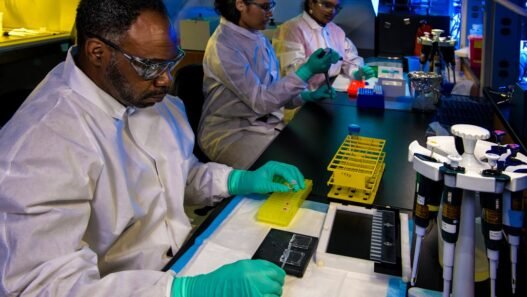
One of the most exciting developments is the rapid advancement in battery recycling and repurposing. It’s no longer just about grinding up old batteries; sophisticated hydrometallurgical and pyrometallurgical processes can now recover over 95% of valuable materials like lithium, nickel, cobalt, and manganese. Companies like Redwood Materials in the US and Northvolt in Sweden are leading this charge, building massive recycling facilities designed to process gigafactories’ worth of spent batteries. I recall a conversation with a materials engineer from a recycling startup who described their process not as waste management, but as “urban mining,” extracting precious resources from what was once considered scrap. This isn’t just an environmental win; it’s an economic imperative. By 2040, recycled materials could account for nearly half of the demand for some battery metals, drastically reducing the need for new mining and lowering the overall carbon footprint of battery production, as highlighted by a recent report from McKinsey & Company.
Furthermore, before a battery is fully recycled, it often has a second life as stationary energy storage. Imagine a retired EV battery pack, no longer suitable for a car, finding new purpose powering a home, a grid-scale storage facility, or even a remote village microgrid. In places like California, pilot programs are already demonstrating how these “second-life” batteries can enhance grid stability, store excess renewable energy from solar panels, and provide backup power during outages. It’s a pragmatic solution that extends the useful life of these valuable assets, delaying recycling and maximizing their embedded energy and materials.
The Grid’s New Ally: Vehicle-to-Grid (V2G) Technology
The notion of an EV simply drawing power from the grid is rapidly evolving. We are now entering an era where electric vehicles are becoming dynamic assets in the energy ecosystem through Vehicle-to-Grid (V2G) technology. Imagine your EV not just as transportation, but as a giant, mobile battery pack that can intelligently interact with the electricity grid.
V2G allows EVs to not only draw power but also to feed excess energy back into the grid, particularly during peak demand hours or when renewable energy generation is low. This bidirectional flow of energy is a game-changer for grid stability and the integration of intermittent renewable sources like solar and wind. Consider a scenario where thousands of EVs, parked during the day, could collectively act as a massive distributed energy storage system, soaking up surplus solar power and then releasing it back into homes and businesses in the evening when the sun sets and demand peaks.
Several pilot projects across Europe and North America are already showcasing the profound potential of V2G. In Denmark, for example, Frederiksberg Forsyning, a utility company, has partnered with Nissan and the technical university DTU to implement V2G chargers at public and corporate parking lots. Owners participating in the program can earn money by allowing their vehicles to discharge power back to the grid when needed, effectively turning their car into a revenue-generating asset. This doesn’t just benefit the grid by providing flexibility and balancing capabilities; it empowers consumers, potentially reducing their total cost of EV ownership and incentivizing renewable energy adoption. The International Energy Agency (IEA) projects that V2G could significantly contribute to grid stability and resilience, especially as EV adoption scales and renewable energy becomes the dominant source of electricity, ultimately accelerating the transition to a fully decarbonized energy system. It’s a vision where every parked EV isn’t just idling, but actively contributing to a more sustainable and robust energy future.
These innovations – from the molecular breakthroughs in battery chemistry to the intricate dance between vehicles and the grid – are not isolated incidents. They are threads in a meticulously woven tapestry, each strand strengthening the fabric of sustainable mobility. They speak to a future where technology doesn’t just serve convenience but actively contributes to the health of our planet and the resilience of our communities. And as we look to tomorrow, the lessons learned from these journeys of innovation offer a compass, guiding us towards an even more profound transformation.
The first time I really felt the shift happening wasn’t when I read a glowing report on EV sales figures or saw a government pledge for net-zero. It was far more personal, almost visceral. I was on a road trip through central Oregon a few years ago, a region famed for its rugged beauty and, let’s be honest, its independent spirit. My rental car, an unassuming electric crossover, needed a charge. I pulled into a small town, expecting to scour for a single, lonely charger. Instead, I found a gleaming hub: eight high-speed chargers nestled beside a local bakery, solar panels glinting on the roof above. There were families charging, hikers swapping trail stories, and even a pickup truck, quiet as a whisper, plugged in.

The scent of fresh bread mingled with the hum of the chargers, and for a moment, it wasn’t about the technology itself, but the unexpected sense of community. This wasn’t some futuristic vision; it was simply life happening, enabled by a technology that felt both revolutionary and utterly ordinary. It struck me then that the transition to electric mobility wasn’t just about government mandates or ambitious corporate goals; it was quietly, powerfully, taking root in the everyday rhythms of towns like this. It was a tangible spark of change, igniting not with a bang, but with the quiet, consistent hum of electrons.
This wasn’t just a fluke. I started paying more attention. I saw how policy initiatives, from tax credits to charging infrastructure investments, were subtly reshaping consumer habits and perceptions. The initial range anxiety, once a dominant narrative, was being systematically chipped away by better batteries and an expanding network that felt increasingly reliable. The silence of an EV driving past, once a novelty, was becoming a comforting constant on city streets. It was a gradual awakening to the fact that the future of mobility wasn’t just arriving; it was already here, quietly embedding itself into the fabric of our existence, making the promise of a cleaner, more sustainable future feel within reach.
The journey from that silent hum in Oregon to the global revolution we’re witnessing today has been nothing short of extraordinary, and at its heart lies the relentless pursuit of better battery technology. For years, the conversation around electric vehicles was dominated by lithium-ion – a marvel of chemistry that powers everything from our phones to our cars. Yet, as our collective ambition for electrification grew, so too did the awareness of its limitations: the ethical sourcing of raw materials like cobalt, the environmental footprint of mining, and the ultimate challenge of recycling. I remember the first time I realized lithium wasn’t the perfect solution, not because it was bad, but because the scale of our need demanded something even more sustainable, more abundant, and more affordable.
This realization has fueled an incredible innovation journey, a global sprint to redefine the very core of EV power. Researchers and engineers are pushing boundaries at an unprecedented pace. Take solid-state batteries, for instance. For years, they’ve been considered the “holy grail” – replacing the volatile liquid electrolyte in traditional lithium-ion cells with a solid material promises greater energy density, faster charging times, and significantly improved safety. Imagine a battery that can power a car for 500 miles, charge in 10 minutes, and pose almost no fire risk. Companies like Toyota, often seen as conservative, are pouring resources into solid-state, aiming for mass production by the late 2020s. Similarly, startups like QuantumScape are making significant strides, demonstrating performance that brings this once-distant dream closer to reality. According to BloombergNEF, solid-state batteries could see widespread adoption in premium segments by 2028, gradually permeating the broader market.
But innovation isn’t just about pushing the performance envelope; it’s also about democratizing sustainable technology. This is where alternatives like sodium-ion batteries shine. Sodium is one of the most abundant elements on Earth, making it a far more sustainable and potentially cheaper alternative to lithium, particularly for applications where extreme energy density isn’t the primary driver. While they may not offer the same range as their lithium counterparts just yet, sodium-ion batteries are excellent for smaller urban EVs, two-wheelers, and crucial for grid-scale energy storage, playing a vital role in balancing renewable energy fluctuations. Chinese manufacturers are already integrating sodium-ion into entry-level EVs, proving its viability. This diversification of battery chemistries is essential, ensuring that the transition to electric mobility doesn’t simply trade one resource dependency for another.
Then there’s the monumental challenge of the battery lifecycle itself. It’s not enough to build better batteries; we must ensure they are part of a truly circular economy. This means robust recycling infrastructure and a thriving second-life market. Companies like Redwood Materials in the US are pioneering closed-loop recycling, recovering critical materials like lithium, cobalt, and nickel from spent EV batteries and factory scrap, then feeding them back into the supply chain. This isn’t just good for the planet; it’s smart economics, reducing reliance on virgin mining and stabilizing material costs. Furthermore, old EV batteries, even when they no longer meet the demanding performance requirements for a vehicle, often retain 70-80% of their capacity. These “second-life” batteries are being repurposed for stationary energy storage systems, powering homes, businesses, and even entire communities, effectively doubling their useful lifespan and creating new value streams. The International Energy Agency (IEA) has consistently highlighted the critical role of battery recycling and repurposing in achieving global net-zero targets, projecting significant growth in these sectors through the next decade.
The sheer breadth of human ingenuity applied to these challenges is breathtaking. From chemists meticulously designing new electrode materials in university labs to engineers scaling up production at gigafactories, and even policy experts crafting incentives to accelerate adoption, thousands of passionate individuals are driving this change. Their work isn’t just about making cars go further; it’s about building a resilient, cleaner energy system that underpins a truly sustainable future, tackling everything from range anxiety with better tech to ensuring ethical sourcing and end-of-life solutions for a new generation of mobility.
As I look ahead to 2026 and beyond, the vision for tomorrow is not just clearer; it’s more vibrant, more intertwined with our daily lives than ever before. The lessons learned from the initial rollout of EVs have paved the way for a holistic approach to sustainable mobility. We’ve moved beyond simply swapping out gasoline engines for electric motors; we’re fundamentally rethinking our relationship with energy, infrastructure, and community. The innovations in battery technology—be it the promise of solid-state, the abundance of sodium-ion, or the efficiency of advanced LFP cells—are not merely technological breakthroughs. They are catalysts for a grander transformation.
For communities, this means cleaner air, quieter streets, and a reduced dependence on volatile fossil fuel markets. Imagine cities where school buses run silently and emit no fumes, protecting children’s respiratory health. Imagine rural areas where local energy grids are bolstered by repurposed EV batteries, ensuring resilience during outages and integrating more renewable energy. According to a McKinsey report on the circular economy, optimizing battery lifecycles alone could unlock billions in value and significantly reduce carbon emissions. These advancements aren’t just about individual convenience; they’re about building healthier, more resilient societies.
The planet, of course, stands to gain immensely. Every mile driven on electricity generated from renewable sources reduces our carbon footprint, slowing the inexorable march of climate change. The shift toward a circular battery economy minimizes waste and the environmental impact of raw material extraction. We are, maybe, still at the beginning of the green revolution, but the momentum is undeniable.
So, what does this mean for us, the readers, the citizens of this evolving world? We have a role to play. Consider how you might rethink mobility in your own life: Can you support businesses that prioritize sustainable logistics? Can you advocate for better charging infrastructure in your community? Perhaps it’s as simple as exploring public transport options or even considering an EV for your next vehicle, keeping an eye on the battery types and manufacturer commitments to recycling. Each choice, no matter how small, sends a signal, contributing to the demand for greener habits and more sustainable innovation.
For me, the hope for the future of green tech and EVs isn’t rooted in some naive belief that technology alone will solve all our problems. Rather, it springs from witnessing the sheer human determination, the collaborative spirit of scientists, engineers, policymakers, and ordinary citizens striving for something better. It’s seeing a charging hub thriving in a small Oregon town, knowing that every quiet hum represents a collective step towards a healthier planet. It’s understanding that the pursuit of a sustainable battery isn’t just about a chemical formula; it’s about our shared commitment to creating a cleaner, smarter, and more equitable world for generations to come. The progress isn’t just about machines; it’s about us.
REMINDER: Every Post Can ONLY Claim Per Day ONCE
Pls Proceed to NEXT Post!