











# Inside the Art of Sustainable Upcycling: Elsie Larson’s Creative Journey
The gentle thud of a dropped block of reclaimed teak echoed softly in Elsie Larson’s workshop, a sound that, to an outsider, might signal a misstep. For Elsie, however, it was merely part of the ongoing dialogue between maker and material. Dust motes danced in the late afternoon sun, illuminating shelves laden with forgotten textiles, discarded furniture fragments, and an array of hand tools, each worn smooth by countless hours of purposeful work. Here, in this quiet sanctuary, the cacophony of modern consumption found a counterpoint, a space where stories ended not in landfills, but in rebirth.
Elsie Larson, a name synonymous with intentional crafting and a quiet revolution in sustainable design, doesn’t merely make; she listens. She listens to the whispers of aged wood, the texture of a once-loved garment, the silent plea of overlooked objects awaiting a second act. Her journey began not with a grand vision of an empire, but with the simple, urgent desire to mend, to repair, to create beauty from what others had cast aside. She recalls a specific moment, years ago, salvaging a derelict armchair from a curbside pile, its frame sturdy but its upholstery shredded. The challenge, the puzzle, sparked something profound within her – a realization that true value isn’t inherent in newness, but in the effort of renewal, in the thoughtful extension of an object’s life. This early encounter with the forgotten has since become the bedrock of her brand, “Reclaimed Reveries,” a testament to conscious consumption in an era often defined by disposability.
In today’s fast-paced digital marketplace, where the pursuit of novelty often overshadows the wisdom of longevity, Elsie’s approach resonates with a growing demand for authenticity. As global supply chains groan under pressure and consumers grapple with the environmental toll of mass production, the spotlight intensifies on creator-led businesses championing sustainability. Elsie Larson’s philosophy isn’t just timely; it’s a necessary reimagining of what craft can be – a balm against waste, a testament to human ingenuity, and a quiet beacon for a more mindful way of living. We delved into her world, eager to understand the ethos that elevates mere upcycling to an art form, revealing lessons that transcend the workshop and touch the very fabric of how we choose to live and create.

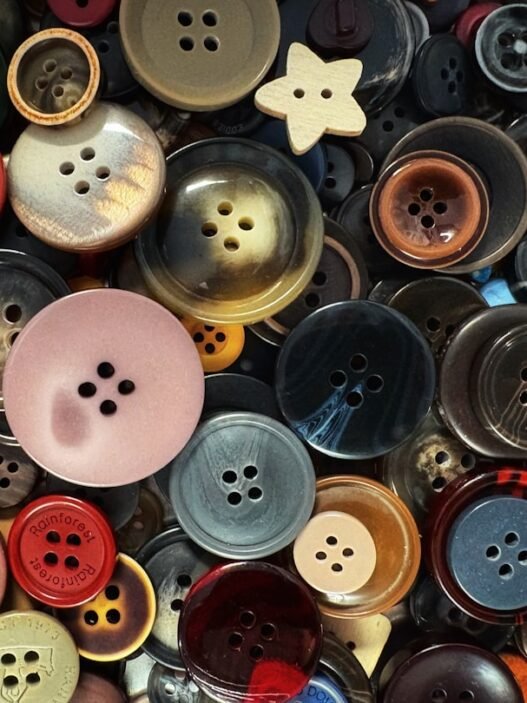
Elsie’s studio, not a typical pristine artisan’s space, felt more like an alchemist’s den – vibrant, messy, yet deeply ordered in its chaos. Scraps of silk cascaded from baskets, antique buttons glinted in jars, and unfinished projects hummed with a latent energy. Her hands, often stained with paint or dye, moved with an almost instinctual grace as she spoke, punctuating her thoughts with a gesture toward a half-finished quilt or a reimagined wooden box. It wasn’t an interview in the conventional sense, but rather a slow, unfolding narrative, punctuated by the soft rasp of sandpaper or the rhythmic click of knitting needles as she worked on a small patch.
“It’s never about starting with a blank canvas for me,” Elsie began, her voice soft but imbued with a quiet conviction. “It’s about starting with a story already told, a life already lived. This piece of wood,” she picked up a weathered plank, its edges softened by time, “it was part of an old barn. Imagine the storms it weathered, the generations it saw. My job isn’t to erase that history, but to honor it, to give it a new chapter where its past is still visible, still felt.” She explained that this reverence for history is at the core of her material sourcing. She doesn’t just buy; she forages, barters, and meticulously seeks out materials destined for landfill, often from old estates, demolition sites, or textile recycling centers. “There’s a beautiful dance in finding what’s been discarded and seeing its potential. It’s a treasure hunt, really, but the treasure isn’t gold, it’s resilience.”
Her process is deliberately slow, a counter-narrative to the instant gratification culture. She recounted a particularly challenging project: a series of dining chairs, each unique, salvaged from various curbsides. “Some had broken legs, others splintered backs. It wasn’t about making them uniform; it was about celebrating their individual scars, bringing them into a cohesive collection through careful repair and a shared, natural finish. It took weeks, sometimes months, to source the right wood for repairs, to hand-sand away years of neglect without stripping their character.” This meticulous approach, she admitted, isn’t always efficient by conventional business metrics. “There were moments, many of them, when I wondered if I was simply spinning my wheels, pouring hours into something that commercially might not make sense. But then I’d feel the grain of the wood, smooth under my palm, and remember the purpose: it’s not just an object; it’s a protest against disposability.”

She reflected on the early days of “Reclaimed Reveries,” when the market for upcycled goods was nascent. “People were skeptical. They wanted new, pristine. They saw ‘used’ as ‘lesser.’ My biggest hurdle wasn’t the craft itself, but shifting that perception. I learned that authenticity sells, not just the product, but the story of its making, the intention behind it.” Elsie found her niche by focusing on heirloom quality, drawing inspiration from Japanese wabi-sabi – finding beauty in imperfection and transience – and the practical elegance of Scandinavian design, where form follows function and materials are respected. She began to document every step, sharing the journey of each piece online, revealing the painstaking repairs, the natural dyes extracted from kitchen scraps, the hand-stitching that bound disparate elements into a harmonious whole. This transparency built a loyal community, transforming casual buyers into conscious patrons.
One particular learning curve, she shared, involved moving from purely aesthetic repairs to understanding the structural integrity of different materials – how certain woods react to humidity, the lifespan of various natural glues, or the best way to reinforce a fabric that was already decades old. “I made mistakes, of course,” she said with a gentle laugh, pointing to a small, almost imperceptible patch on a textile hanging nearby. “That’s a scar from an early attempt at natural dyeing that went horribly wrong. The fabric almost dissolved! But even failures teach you. They teach you humility, patience, and often, a new way to approach the next challenge. Now, that patch reminds me to respect the material’s limits, to work with it, not against it.” Her voice carried a quiet authority, honed by years of direct engagement with the physical world. She sees her craft not as a mastery over materials, but a collaboration with them.
The economic model of Reclaimed Reveries, while rooted in passion, is also underpinned by a shrewd understanding of its unique value proposition. Elsie recognized that her products couldn’t compete on price with mass-produced items. Instead, she focused on their narrative, their environmental impact, and their inherent quality. “My customers aren’t just buying a lamp or a quilt; they’re investing in a piece of conscious art, a fragment of history, and a statement against waste. The value isn’t just in the object; it’s in the entire lifecycle, from origin to revival.” This emphasis on the intangible benefits allowed her to command prices reflective of the skilled labor, time, and philosophical depth embedded in each creation, creating a sustainable business that aligns with her personal values.
The afternoon sun dipped lower, casting long shadows across her workbench. The air, thick with the scent of wood and linen, felt like a comforting embrace. Elsie set down her knitting, picking up a small, smooth river stone she kept on her bench. “Every piece, every fragment I work with, it holds energy. And my job is to gently coax that energy into a new form, to extend its purpose. There’s a profound peace in that, a quiet understanding that we are all part of a larger cycle of creation and recreation.”
To spend time with Elsie Larson is to be reminded that true craftsmanship is a profound act of care. It is a slow, deliberate conversation with the material world, teaching us not just about patience, but about the enduring value of purpose. Her journey with Reclaimed Reveries is a testament to the power of a single idea – that every discarded object holds potential – to reshape not only an aesthetic but an entire worldview. It underscores the vital importance of reconnecting with the physical, tangible world, reminding us that even in an age of digital abstraction, the human touch remains irreplaceable.

Her work asks us to look closer, to see beyond the initial appearance of wear or age, and to recognize the inherent worth in things often overlooked. It’s a gentle invitation to pause, to consider where our possessions come from and where they will go, and to perhaps, find a new reverence for the art of renewal.
Elsie’s final words, uttered as she carefully arranged a collection of threads, seemed to encapsulate the essence of her philosophy: “The real art isn’t just in making something beautiful from what’s broken; it’s in recognizing that nothing is truly broken beyond repair, only waiting to be seen anew.”
This profound insight underscores that long-term success in DIY & Crafts e-commerce, especially in the sustainable realm, stems not from chasing fleeting trends, but from a bedrock of genuine curiosity, unwavering adaptability in the face of material limitations, deep resilience to economic and perceptual challenges, and a commitment to deliberate experimentation with form and function. It demands customer empathy, understanding that patrons are buying into a philosophy as much as a product, and an unceasing dedication to continuous learning – from materials, from failures, and from the quiet wisdom of objects themselves. Her journey is a profound reframe, challenging us to see consumption not as an end, but as a continuous cycle of care, creativity, and conscious revival.
REMINDER: Every Post Can ONLY Claim Per Day ONCE
Pls Proceed to NEXT Post!