







The ancient yearning for a longer, healthier life, once relegated to myth and alchemy, has in our era transformed into an urgent, data-driven scientific pursuit. We are, perhaps, the first generation to truly glimpse the possibility of not just adding years to life, but life to years, pushing back against the seemingly inevitable tide of decay. This shift isn’t merely about extending lifespan; it’s about optimizing the human experience, challenging the very definition of aging itself. As our understanding of cellular biology deepens, so too does our ambition to intervene, to tinker with the delicate machinery that governs our existence. The question is no longer if we can influence aging, but how—and to what extent.
At the epicenter of this seismic shift is the work emanating from the lab of Dr. David Sinclair at Harvard Medical School, a name synonymous with longevity research. Yet, the real engine of discovery often lies within the dedicated teams, the unsung heroes translating groundbreaking theories into actionable insights. Among them, Dr. Sarah Milstein stands out. A quietly brilliant molecular biologist and lead researcher within Sinclair’s laboratory, Dr. Milstein embodies the intellectual rigor and pragmatic curiosity that define this new frontier. Her work, particularly on the intricate dance of NAD+ metabolism and its downstream effects on sirtuin activity, has been pivotal in refining our understanding of how cellular pathways might be manipulated for healthspan extension. My interest in speaking with her wasn’t merely to chase headlines but to understand the measured pace of scientific progress, the daily grind in a field often characterized by breathless optimism.
The timing of our conversation feels acutely relevant, bordering on critical. We live in an age awash with biological data, from continuous glucose monitors strapped to arms to smart rings tracking sleep architecture, feeding algorithms with the granular details of our physiology. The promise of AI-driven self-quantification and precision supplementation, where bespoke protocols are tailored to an individual’s unique epigenetic signature and metabolic needs, is no longer distant science fiction. It’s an emerging reality, albeit one fraught with both immense potential and pervasive misinformation. Navigating this landscape requires guides who possess not only deep scientific acumen but also a profound ethical compass. Dr. Milstein, with her grounded perspective and relentless pursuit of evidence, is precisely that kind of guide. I caught up with her between experiments, the faint hum of lab equipment a constant backdrop to our discussion, eager to peel back the layers of popular biohacking trends and explore the bedrock of science beneath them.
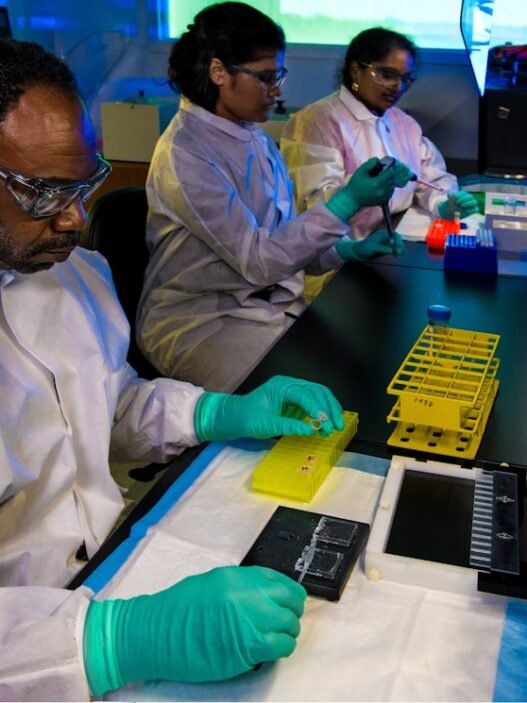
The fluorescent glow of the Harvard lab corridor cast long shadows as Dr. Milstein led me to a small, windowless office crammed with whiteboards covered in intricate biochemical pathways. She settled into her chair, a slight smile playing on her lips, a stark contrast to the gravitas of her research. My initial intention was a direct Q&A, but her way of speaking—a blend of precise scientific explanation and reflective anecdotes—naturally pulled the conversation into a hybrid format, punctuated by my observations and occasional interjections.

“Our goal here,” she began, gesturing vaguely towards the complex diagrams behind her, “is not to create superheroes. It’s to understand the fundamental drivers of aging and, by extension, disease. If we can dial down those drivers, the benefits ripple across the entire system.”
I wanted to start with the elephant in the room, the compound that has almost become synonymous with the Sinclair lab’s public-facing work: Nicotinamide Mononucleotide, or NMN. “NMN has taken on an almost mythical status in the biohacking community,” I noted. “Many see it as a silver bullet. What’s the reality from your perspective inside the lab?”
Dr. Milstein leaned forward, her expression shifting to one of intense focus. “The excitement around NMN, and generally around NAD+ precursors, is certainly merited by the animal data. In mice, enhancing NAD+ levels, which naturally decline with age, has shown remarkable effects: improved metabolic function, enhanced mitochondrial health, even increased endurance. The mechanisms are robust, primarily through activating sirtuins, a family of enzymes critical for DNA repair, genome stability, and inflammation regulation.” She paused, allowing the scientific weight of that statement to sink in. “However, human studies are still relatively early stage. We have some promising data on safety and bioavailability, and even some markers of metabolic improvement in specific populations. But generalizing those findings to definitive anti-aging effects across the entire human population, or even to a significant lifespan extension, is premature. It requires much larger, longer, double-blind, placebo-controlled clinical trials. The scientific community, including our lab, is pushing hard for this, but it’s a marathon, not a sprint.”
My own experience with NMN, after several months, had been subtle at best. I had hoped for a noticeable surge in energy, a palpable shift, but mostly observed improved sleep quality and perhaps a slightly quicker recovery from exercise, effects that were hard to disentangle from other lifestyle variables. “I confess,” I said, “I wanted to believe it worked magic. But without clear, objective metrics beyond how I ‘felt,’ it’s hard to attribute significant changes solely to NMN. It highlights the challenge of self-experimentation.”
She nodded knowingly. “Exactly. And that’s where the data revolution becomes a double-edged sword. People have access to more information than ever, but often lack the context or critical understanding to interpret it. The placebo effect is real and powerful. What we need are reliable biomarkers – not just subjective feelings. Epigenetic clocks, like the Horvath clock or DunedinPACE, are moving targets, but they represent a promising avenue for objectively measuring biological age and the efficacy of interventions.”
This led us to the broader concept of environmental stressors as hormetic agents. “Beyond supplements, the focus has increasingly shifted to lifestyle interventions – cold plunges, sauna, fasting,” I remarked. “How does your lab view these non-pharmacological approaches?”
“Think of it as adaptive stress,” Dr. Milstein explained, picking up a whiteboard marker and sketching a quick diagram. “Controlled exposure to stressors – whether it’s the cold, heat, or caloric restriction – activates ancient survival pathways. Cold exposure, for instance, doesn’t just make you shiver; it stimulates the sympathetic nervous system, activates brown adipose tissue, and potentially enhances mitochondrial biogenesis. These are mechanisms that directly feed into metabolic health and cellular resilience.” She tapped the diagram. “It’s about challenging the system just enough to make it stronger, without overstressing it.”

She continued, describing how these stressors, often uncomfortable, push the body into a state of hormesis, a biological phenomenon where a low dose of an otherwise harmful agent can induce a beneficial adaptive response. “Fasting, for example,” she elaborated, “triggers autophagy – cellular cleanup – and shifts the body’s metabolic fuel source, improving insulin sensitivity. These aren’t just anecdotal benefits; they’re backed by a growing body of mechanistic research published in journals like Cell Metabolism and Nature.” She pointed specifically to studies showing caloric restriction’s impact on various species and the emerging human data on time-restricted eating. “The key, always, is moderation and personalization. What’s hormetic for one person might be detrimental to another, especially given genetic predispositions or pre-existing conditions.”
Our conversation meandered to the delicate balance between the promise of molecular interventions and the foundational importance of basic lifestyle choices. Dr. Milstein stressed that even the most cutting-edge supplement or sophisticated drug would struggle to overcome chronic sleep deprivation, poor diet, or relentless stress. “It’s like trying to fill a leaky bucket,” she mused. “You can pour in all the precious NMN you want, but if the bottom is falling out due to terrible sleep, you’re not making progress. We see incredible focus on one novel molecule, while ignoring the pillars of health. That’s where the narrative of self-optimization often becomes reductive and, frankly, ineffective.”
It was clear that for Dr. Milstein and the team, the pursuit of longevity was not about circumventing natural processes but understanding and optimizing them. It was a holistic endeavor, demanding a rigorous scientific lens, even on the most mundane aspects of daily life. The ultimate goal wasn’t just a longer count of years, but an expansion of the quality within those years, a richer, more vibrant human experience.

The deepest takeaway from my time with Dr. Milstein wasn’t a secret protocol or a revolutionary pill, but a profound reorientation of perspective. Longevity science, particularly within the orbit of the Sinclair lab, isn’t simply about extending life; it’s about a meticulous, patient, and often uncomfortable interrogation of what it means to live well, to age gracefully, and to optimize the inherent resilience of the human organism. It’s a philosophical stance disguised as a scientific pursuit, urging us to question the inevitability of decline and to proactively engage with our own biology.
The reality, as Dr. Milstein articulated, is a nuanced tapestry woven from promising research, cautious optimism, and a healthy dose of scientific skepticism. While the animal data for compounds like NMN or the benefits of hormetic stressors like cold and fasting are compelling, the definitive human evidence remains an ongoing endeavor. What’s promising is the mechanistic understanding emerging from labs globally – insights into NAD+ metabolism, sirtuin activation, autophagy, and epigenetics – which provide a robust framework for future interventions. What’s hype, however, is the rush to declare definitive anti-aging miracles based on preliminary findings or anecdotal reports. The road ahead demands critical thought, distinguishing between the proven and the merely plausible.
For those eager to apply these insights, the path is less about chasing the latest fad and more about disciplined, informed experimentation within the boundaries of safety and common sense. As Dr. Milstein put it, her voice softening slightly as she concluded, “The grand experiment of human longevity is really a grand experiment in self-awareness. It asks us to look inward, to understand our own unique biology, and to become active participants in our health, not just passive recipients of age.”
Long-term transformation in human optimization demands an insatiable curiosity, a commitment to disciplined experimentation (ideally with medical guidance), and a keen awareness of one’s own body. It calls for adaptability, understanding that what works today may need adjustment tomorrow. It requires nervous-system intelligence – the ability to discern genuine biological signals from noise – and a delicate balance between data-driven decisions and intuitive self-knowledge. Crucially, it asks for self-compassion and patience, acknowledging that true change is incremental, not instantaneous. The pursuit of longevity is not just about extending a finite timeline; it’s about making peace with the present, embracing the challenge of growth, and recognizing the profound, ongoing privilege of being alive. We aren’t simply adding years; we are discovering new dimensions of what it means to be.
Please watched this video till the end to earn 5 PCoins
REMINDER: Every Post Can ONLY Claim Per Day ONCE
Pls Proceed to NEXT Post!