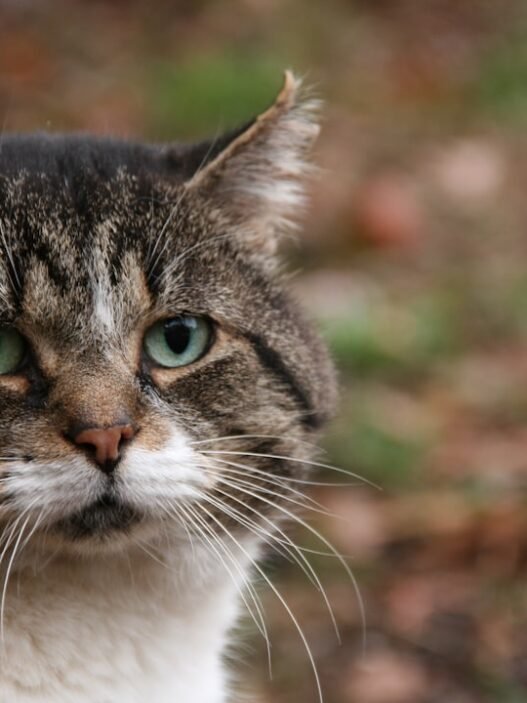












The quiet breath of a sleeping cat, the subtle twitch of a dog’s ear as you walk by—these aren’t just biological functions; they are profound, unspoken communications. We share our lives with creatures whose inner worlds are often as complex as our own, yet we frequently miss the nuanced symphony of their emotional lives. How often do we project our human frustrations or joys onto them, rather than truly listening to the silent wisdom emanating from their unique expressions of anxiety, comfort, or curiosity? This profound philosophical chasm between human intent and animal reality is where countless misunderstandings blossom, leading to behaviors we label as “mistakes” when, in fact, they are often desperate pleas or intricate coping mechanisms.
It’s in navigating these often-overlooked emotional landscapes that Dr. Sarah Wooten has built her remarkable reputation. A veterinarian with a soul of a storyteller and the mind of a behavioral scientist, Dr. Wooten isn’t just diagnosing ailments; she’s interpreting entire narratives. I recall a particular case she shared during a wellness conference, involving a senior terrier mix named Rosie, who had developed sudden, severe resource guarding around her food bowl. Rosie’s owner had tried everything from stricter discipline to new diets, only for the behavior to escalate. Dr. Wooten spent a quiet hour in Rosie’s home, not once touching the dog, but simply observing the energy dynamics. She noticed the subtle flinch Rosie made whenever the owner’s adult son entered the kitchen, a flinch invisible to anyone not trained to see the minute indicators of fear. It turned out Rosie’s anxiety wasn’t about the food, but about the son’s boisterous entries and sudden movements near her eating space, triggering a deep-seated insecurity rooted in her rescue past. Dr. Wooten’s intervention wasn’t a medical one, but a behavioral and energetic one, teaching the family to create a predictable, peaceful “sacred space” for Rosie to eat, combined with specific calming cues. Rosie’s guarding melted away within weeks.
This profound understanding of the emotional undercurrents beneath physical symptoms and behavioral patterns has become increasingly vital in today’s pet care landscape. As pet ownership continues its rapid ascent, and pet parents invest more deeply in premium products and services, the challenge for brands is no longer just about offering quality, but about fostering genuine trust and deeper connections. In a crowded market, differentiation comes from solutions that speak not just to physical health, but to the holistic well-being—the emotional, mental, and energetic health—of our cherished companions. Dr. Wooten’s insights aren’t just about fixing behaviors; they are about forging a more authentic, emotionally intelligent partnership with our pets, guiding us beyond superficial training to a profound understanding of their inner worlds. So, let’s peel back the layers of common pet parent missteps, not with judgment, but with an open heart and a willingness to truly listen.
The morning sun filtered through Dr. Wooten’s clinic window, illuminating dust motes dancing in the air, a metaphor for the invisible energies at play in our pets’ lives. She leaned forward, a thoughtful expression on her face, reflecting on the myriad ways well-intentioned pet parents inadvertently create behavioral challenges. Her approach is less about “fixing” a pet and more about illuminating the human role in the behavioral ecosystem.
“One of the most profound mistakes I see,” Dr. Wooten began, her voice calm and measured, “is our human tendency to project our own emotions and interpretations onto our pets, rather than learning their language. We assume a dog who pees on the rug after we scold them is ‘guilty.’ But guilt is a complex human emotion. What they’re actually expressing is often appeasement—a primal desire to reduce threat, coupled with stress, leading to an involuntary urination. Their lowered head, averted gaze, and lip licks are not signs of remorse; they are classic indicators of stress and submission. When we punish them in that state, we’re not teaching them not to pee inside; we’re teaching them to fear us and to conceal their accidents, making it harder to house-train effectively.”
She described a case of a high-energy Border Collie mix named Dash, whose owners were exasperated by his constant “demanding” barking and destructive chewing. They’d tried everything: more walks, different toys, even a bark collar. “Dash wasn’t being demanding,” Dr. Wooten explained, her hands gently gesturing. “He was incredibly bored, under-stimulated, and struggling with a classic case of canine separation anxiety, rooted in a shift in his owner’s work schedule. The barking wasn’t a desire for attention as much as an expression of internal distress and a desperate attempt to gain control over an unpredictable environment.”

Dr. Wooten emphasized the critical role of environmental enrichment and understanding species-specific needs. “We bring these brilliant, complex animals into our homes, often forgetting they still carry instincts honed over millennia. A dog needs to sniff, to chew, to explore. A cat needs to climb, to hunt, to survey. When these innate drives aren’t met, their brains, particularly the limbic system and prefrontal cortex, are under-stimulated, leading to anxiety, frustration, and subsequently, ‘bad’ behaviors. Think of scent work, for instance. It’s not just a fun game; it engages a dog’s primary sense, providing immense mental satisfaction, reducing cortisol levels, and building confidence. It’s a powerful natural antidepressant for them.” She referenced studies on olfaction in canines, highlighting how engaging their scent capabilities can profoundly impact their emotional well-being, reducing reactivity and increasing calm focus.
We moved onto the pervasive issue of inconsistent boundaries, an area Dr. Wooten frequently addresses. “Dogs, and cats to a lesser extent, are creatures of habit. They thrive on predictability and clear, consistent boundaries. When we, as pet parents, are inconsistent—allowing jumping on guests one day but scolding it the next, or letting them sleep on the bed until a new partner moves in—we create immense cognitive dissonance for them. This unpredictability is a major source of anxiety. Their world feels chaotic, and they don’t know what to expect. This isn’t about being harsh; it’s about being fair and providing a clear framework. Positive reinforcement, applied consistently and immediately, is the bedrock of building trust and good behavior. Every interaction, every moment, is a training opportunity, whether we realize it or not.” She paused, then added, “It takes patience, of course. We all have days where we’re tired, distracted, or our own emotions get the better of us. The key is to recognize those moments, take a breath, and get back to consistency as soon as possible, forgiving ourselves and our pets for the imperfections.”
Dr. Wooten then touched on the often-overlooked emotional contagion between humans and animals. “Our emotional state is a palpable energy field for our pets. They are incredibly attuned to our stress, our joy, our frustration. If a pet parent is constantly anxious, their dog will often mirror that anxiety, becoming more reactive or clingy. This isn’t ‘pseudo-science’; it’s rooted in their finely tuned senses and their evolutionary drive to read social cues for survival. Studies on human-animal interaction show physiological changes in both species when they interact; cortisol levels can drop, oxytocin can rise. Mindfulness practices aren’t just for us; they can fundamentally shift the emotional landscape of our homes for our pets. Simple, intentional breathing exercises performed near a pet can have a calming co-regulatory effect.” She explained how even a gentle, intentional touch or a calm, measured voice can significantly lower a pet’s heart rate and stress hormones, demonstrating the profound physiological impact of our presence.

The conversation naturally drifted to the importance of consulting professionals when behavioral issues persist. “While holistic methods like scent therapy, calming supplements, or consistent positive reinforcement are incredibly powerful, they should always complement, not replace, veterinary care. If a sudden behavioral change occurs, a medical check-up is paramount. Pain, illness, or even an underlying neurological condition can manifest as ‘bad’ behavior. And for severe anxiety or aggression, a certified veterinary behaviorist is invaluable. Our goal isn’t to be a quick fix, but a holistic guide, ensuring the physical, mental, and emotional pillars are all strong.” It was a crucial reminder that while we seek to understand, we must also seek expert guidance where complex challenges arise.
As our conversation wound down, a profound realization settled: fixing pet behavior mistakes isn’t about dominion, but about cultivating a deeper, more empathetic relationship. It’s about shifting our perspective from viewing unwanted actions as a challenge to our authority, to recognizing them as vital signals from a being trying to navigate a human-centric world. The journey of pet parenting is less about perfecting a pet and more about perfecting our own presence, awareness, and emotional intelligence.
The most meaningful takeaway from our time with Dr. Wooten is this: the true measure of our success as pet parents lies in our willingness to learn, adapt, and evolve alongside our companions. It’s in the quiet moments of observation, the consistent efforts of positive reinforcement, and the conscious creation of environments that nurture their innate needs. We are called to be students of their subtle language, translating their blinks, tail wags, purrs, and sighs into a deeper understanding of their emotional reality.
“The greatest gift we can give our pets,” Dr. Wooten offered, her gaze reflective, “is not just our love, but our compassionate understanding. It’s in recognizing that every ‘mistake’ is an opportunity for connection, a chance to listen more deeply, and to grow into the kind of mindful, present companion they truly deserve.”
This journey demands curiosity about their inner world, adaptability to their changing needs, and resilience in the face of setbacks. It’s about deliberate experimentation with enrichment and communication, fueled by an unwavering customer empathy for these unique beings who share our homes. Through continuous learning, we don’t just fix behaviors; we build unbreakable bonds, fostering a profound, shared existence that enriches both species. Perhaps the ultimate reframe is to see pet training not as a task, but as an ongoing, beautiful conversation—the very silent conversation we started with, now imbued with mutual understanding and unconditional love.
Please watched this video till the end to earn 5 PCoins
REMINDER: Every Post Can ONLY Claim Per Day ONCE
Pls Proceed to NEXT Post!