










Michael Zuber Reveals 2026 Housing Market’s Unexpected Truths
The year 2024 began with a quiet tension in the real estate world, a low hum beneath the surface of seemingly stable markets. Yet, for those attuned to the subtler currents, it was clear: the foundational assumptions about homeownership and investment were undergoing a seismic shift. This wasn’t merely about interest rates or inventory; it was about a deeper recalibration of value, purpose, and the very fabric of urban existence. We’ve collectively glimpsed a future where a home is more than just an asset; it’s a node in an intelligent network, a testament to sustainable living, and a sanctuary from an increasingly unpredictable world.
No one articulates these emergent realities with more clarity and conviction than Michael Zuber. He’s not merely an analyst who dissects data; he’s an architect of foresight, a modern urban strategist whose predictions often precede conventional wisdom by years. His reputation isn’t built on sensationalism but on a meticulous blend of macroeconomic insight, technological understanding, and a profound empathy for how human lives are shaped by the spaces they inhabit. You find him not in the echo chambers of conventional finance, but at the nexus of green tech summits and urban planning symposiums, his gaze consistently fixed on the horizon, distilling complex trends into actionable intelligence.
I recently had the privilege of sitting down with Zuber. His office, a testament to minimalist efficiency, offered panoramic views of a city perpetually under construction – a living laboratory of the very forces we sought to unravel. It was an opportune moment, with global supply chains still re-jigging, the full impact of AI on property valuation just beginning to ripple through the sector, and the ever-present pressure of climate change demanding more resilient, ethical development. Our conversation wasn’t just about numbers; it was about the subtle, often overlooked, truths shaping where and how we’ll live, build, and invest in 2026 and beyond.
# Navigating the Polycrises: Zuber’s Unfiltered Take on 2026
Reporter: Michael, the market feels incredibly complex right now. We’re grappling with inflation, geopolitical instability, and a rapidly evolving climate. How do you see these “polycrises” actually playing out in the housing market by 2026? Are we still talking about a monolithic market, or something far more fragmented?
Michael Zuber: The idea of a monolithic housing market is, frankly, an anachronism. We are absolutely in a fragmented reality, and 2026 will lay bare those divisions more acutely than ever. Think of it less as one ocean, and more like a series of interconnected, yet distinct, seas – each with its own currents, depths, and prevailing winds.

Inflation, for instance, isn’t affecting all segments equally. The luxury market might see some softening as discretionary spending tightens and capital shifts, but the demand for essential, attainable housing? That’s where the true pressure points are forming. Construction costs – from steel to skilled labor – remain stubbornly high. This isn’t a cyclical blip; it’s a structural challenge. The essential workforce, the people who keep our cities running, are being squeezed out. And frankly, that’s not just an ethical issue; it’s an economic threat to urban resilience. A city without its nurses, teachers, and service workers is a city that eventually grinds to a halt.
Reporter: That touches on the core of urban development. We hear a lot about “smart cities” and technological innovation. How much of that is truly impacting the fundamental challenges of housing accessibility and sustainability?
Michael Zuber: Technology is a double-edged sword, and its impact is profoundly uneven. On one hand, yes, we’re seeing incredible advancements. Imagine integrated urban data platforms leveraging AI to optimize energy grids, predict maintenance needs in buildings before they become critical, or even guide more efficient waste management. Copenhagen is a brilliant example of how data-driven urban planning can reduce carbon footprints. Singapore’s ‘Smart Nation’ initiative isn’t just about convenience; it’s about resource optimization and future-proofing. We’re developing buildings that actively produce energy rather than just consume it, like Foster + Partners’ designs for Masdar City, which are almost sentient in their energy management.
But here’s the unexpected truth: while this high-tech, green innovation is incredible, it’s also expensive. And that cost often translates to higher rents or purchase prices, further exacerbating the affordability crisis in our most dynamic cities. The real test for smart cities by 2026 isn’t just about deploying impressive tech; it’s about ensuring equitable access to its benefits. Are we using AI to only optimize luxury high-rises, or are we leveraging it to find efficiencies in constructing high-quality, sustainable affordable housing? The latter is where the true visionary leadership lies. We’ve seen early attempts, some more successful than others, to use modular construction and advanced materials to bring down costs. But the scale needed is immense.
Reporter: So, the sustainable property movement – net-zero construction, green financing – is it truly gaining traction, or is there still a lot of ‘greenwashing’ out there?

Michael Zuber: Ah, greenwashing. It’s the shadow lurking behind every sincere sustainability effort. By 2026, I predict the market will become far more adept at discerning genuine commitment from performative virtue signaling. Regulatory bodies are getting sharper, and crucially, investors and tenants are becoming more educated and demanding.
The financial imperative for genuine sustainability is now undeniable. Properties with verifiable ESG (Environmental, Social, Governance) credentials aren’t just “nice to have”; they’re becoming fundamentally more resilient and attractive investments. They command lower operating costs due to energy efficiency, attract a younger, more environmentally conscious tenant base, and increasingly qualify for preferential “green bonds” or financing. The World Bank and institutions like the European Investment Bank are driving billions into sustainable infrastructure, making it a competitive advantage. Look at the increasing value placed on certifications like LEED or BREEAM – they’re not just plaques; they’re proven pathways to long-term value.
I recall a conversation with a developer who initially resisted implementing smart grid integration in a new multifamily project, citing upfront costs. We crunched the numbers, factoring in projected energy savings, potential carbon credits, and increased tenant demand for eco-conscious living. The ROI, initially scoffed at, became overwhelmingly clear. He went ahead, and the property was fully leased far faster than comparable conventional developments, at a higher yield. That was a turning point for him, a real shift from viewing sustainability as an expense to seeing it as a strategic investment.
Reporter: That’s a powerful anecdote. What about the human element? How are changing demographics and lifestyle preferences – say, the rise of multi-generational living or the demand for more adaptable spaces – influencing development?
Michael Zuber: This is perhaps the most fascinating, and often underestimated, driver for 2026. The shift isn’t just demographic; it’s psychographic. The pandemic accelerated a re-evaluation of what ‘home’ means. We’re seeing a significant rise in multi-generational households, driven by economic necessity, caregiving needs, and a desire for stronger familial bonds. Developers ignoring this are missing a huge segment of the market. This isn’t just about larger houses; it’s about flexible floor plans, accessory dwelling units (ADUs), and even co-living spaces designed for intergenerational communities.
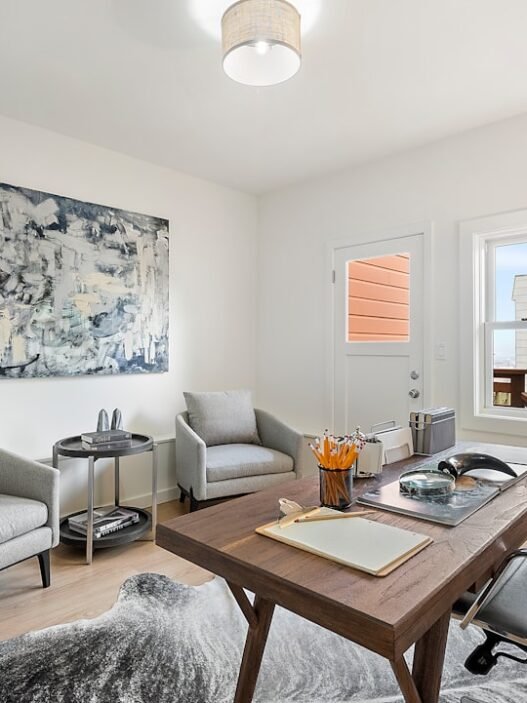
Then there’s the demand for adaptability. The hybrid work model isn’t going away. People want spaces that can seamlessly transition from a productive home office to a family gathering area, or even a small wellness studio. This pushes architects and developers to think beyond rigid room definitions. It means integrating smart home technologies not just for convenience, but for optimizing these flexible uses – lighting that adjusts for video calls, soundproofing solutions for shared spaces, and robust connectivity as a fundamental utility, not an add-on. We’re seeing avant-garde firms like BIG (Bjarke Ingels Group) pushing the envelope on modularity and adaptability, designing spaces that evolve with their inhabitants.

Reporter: Given all these trends, what’s the biggest blind spot for investors or even individual homeowners looking at the 2026 market? What are they missing?
Michael Zuber: The biggest blind spot, without a shadow of a doubt, is underestimating the systemic risk of urban inequality and the associated policy shifts that will inevitably follow. While we celebrate smart tech and green buildings, the fundamental issue of ensuring equitable access to quality housing and urban resources is reaching a critical point. Cities like Dubai and Singapore are grappling with this balance – how do you create world-class, innovative environments while ensuring everyone who contributes to that vitality can afford to live there?
Ignoring this isn’t just morally bankrupt; it’s an economic ticking time bomb. Housing instability leads to workforce instability, reduced productivity, and increased social costs. Governments and local authorities, perhaps driven by public outcry or a stark realization of impending crisis, will inevitably introduce more stringent affordable housing mandates, rent controls, or incentives for truly inclusive developments. Investors who dismiss the “S” in ESG – the social aspect – are taking a huge, unquantified risk. The market is not just an abstract force; it’s a reflection of human needs and societal pressures, and those pressures are building toward a necessary correction.
The market, Zuber concluded, wasn’t merely a series of transactions, but a complex tapestry of human aspirations and systemic pressures, constantly reweaving itself.
The conversation with Michael Zuber left me with a profound sense of both urgency and optimism. His insights distilled the housing market into a series of interconnected challenges and opportunities, underscored by the relentless march of technological innovation and the ethical imperative of sustainability. We are, he suggests, at an inflection point where the metrics of success are expanding beyond mere financial returns to encompass environmental stewardship and social equity.
The future of housing isn’t just about what you build, but how you build it – with intention, resilience, and an unwavering commitment to the human experience.
For individuals and investors navigating this complex landscape, Zuber’s message is clear: success hinges on a blend of acute market awareness and ethical foresight. Diversify your understanding, scrutinize “green” claims for authenticity, and prioritize developments that genuinely contribute to resilient, inclusive communities. The residential spaces that will command true, enduring value in 2026 and beyond are those that embody adaptability, efficiency, and a deep respect for both planetary and human well-being. It is through continuous learning, deliberate experimentation, and a persistent client empathy that we will collectively sculpt cities that are not just smarter, but profoundly more livable.
REMINDER: Every Post Can ONLY Claim Per Day ONCE
Pls Proceed to NEXT Post!